


Activism is a large part of American culture; it is the people’s way of showing the government that they don’t agree with something they’re doing, or people want to bring attention to an injustice. Whatever the reason, activism and protests happen frequently in America with varied results. After living in Qazaqstan for 10 weeks, I can truly say that it is an amazing country with a lot of wonderful people and places, but as Zhanar Sekerbayeva, co-founder of Feminita, encounters daily, a lot can still be improved on behalf of women and LGBTQ+ people. Sekerbayeva and Gulzada Serzhan founded Feminita in 2014 to try to advocate for their rights.
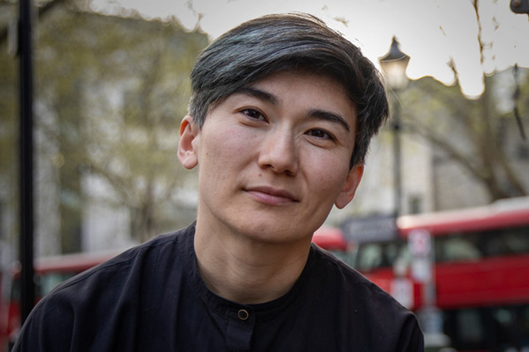
We were lucky enough to have Sekerbayeva come to our class to talk about the work that she and others are doing for their cause. Of all of the things she talked about, there was one thing in particular that intrigued me about their movement. Feminita has been using the label LBQT instead of LGBT because they do not work with gay men, only women. This is for a few reasons, but one of the main ones being that gay men organizations often have much more stable funds because they are connected to HIV organization that can have longer, more stable contracts. So, it is important to Feminita for them to correctly label themselves as a LBQT organization because they are fighting for women’s rights and queer women’s rights, not gay men who in many ways have it easier because they have access to male privilege. In contrast, Feminita has been unable to secure large funds because they are not an officially registered organization. Their efforts to be registered have been denied 10 times, citing small technical mistakes, which is clearly an act of discrimination itself.
The other side of the coin is that some feminist groups don’t want to be connected to Feminita and LBQT people because they don’t want backlash or are not very friendly to queer people. The feminist groups might not even think the LBQT struggle is worth it for them to help out with, but Sekerbayeva strongly believes that the two struggles are intertwined, something I agree with. Both groups face discrimination from the government and the workplace, and as a lesbian herself, Sekerbayeva has a vested interest in fighting for others like her.
So right now, there is not a lot of support for Feminita. Some women who could be great allies in the fight for women’s rights don’t want to be associated with Feminita or LGBTQ+ groups because they think that they will spoil their children with the gay agenda. This line of thinking is probably a holdover from soviet times where the narrative was that only people in jail could practice homosexuality. Additionally, there is the pressure from the Muslim narrative, where a Qazaq family is “supposed” to just be a mother, father, and children.
The law also doesn’t have any specific protections for queer people, so people who commit hate crimes, like the mobs who have attacked Feminita before while protesting, cannot be punished for that hate crime even when it was clearly motivated by sexism and homophobia. They can only be charged for hooliganism. Specific anti-decrimination legislation is one of the things that Feminita is rallying for, and I believe it was one of the things Sekerbayeva wanted to change by running for office.
She ran for a seat on the Almaty City Mäslihat which is a legislative body in the city of Almaty. Unfortunately, she did not win, but it is important for people like her to be visible in the public eye. Sekerbayeva and others provide vital representation and visibility around these taboo subjects. She isn’t cowering, she isn’t hiding, she is out there protesting and running for office. Unsurprisingly, her opponent used her sexual orientation against her; she doesn’t exactly fit the mold of a “typical” Qazaq woman, but that makes her openness about her sexuality even more important.
There is lots of hope, though! Obviously, Feminita is working hard to advocate against discrimination of woman and queer people, and Sekerbayeva said that she helped abolish and outdated, sexist law that had a list of professions that were prohibited for women to have. The list was a holdover from after World War II, and it included 219 professions. Companies could be fined for hiring women into these positions, but now it’s been abolished! Additionally, some Qazaqstani media has been starting to talk about gender equality and LGBTQ+ rights. The Qazaq speaking media unfortunately is still very closed about the subjects, and so there is an imbalance between the Russian and Qazaq speaking media.
So, things are changing for the better, slowly yes, but with capable people like Zhanar Sekerbayeva and Gulzada Serzhan taking the lead with Feminita, I can have hope that we’ll see more change soon.
