


I knew only a few basic facts about Uzbekistan before visiting the country. I was aware that it was once part of the Russian Empire and Soviet Union, and furthermore that there were cities much older than those of Kazakhstan located in the fertile strip along the Amu Darya river. I was also aware of the desiccation of the Aral Sea in the extreme west of the country, as a result of Soviet era projects to divert water for cotton farming. I was completely unaware of the effort the Uzbek government had made to attract tourists to the country, attempting to influence what is known as Uzbekistan’s “destination image,” or the conception of the country that exists in the minds of prospective tourists.
A 2018 study in The Service Industries Journal attempted to compare the destination image that the Uzbek government was trying to create with their promotional material with that created by user-generated content published online by tourists. Images taken from the government’s official tourism website and images posted on Instagram under the hashtags #travel and #uzbekistan were sorted into categories based on their subject matter, and the frequencies of each category among both the Instagram photos and the website’s photos were calculated and compared. Overall, the study found that the government emphasized photos of historical buildings more than anything else, with that category making up just over half of the photos taken from the website. In comparison, historical buildings made up only about a fifth of the photos taken from Instagram. Instead, Instagram users preferred to post photos of specific architectural features of the buildings (considered a separate category by the authors), as well as local people and natural features. A caveat should be added that the official tourism website has since moved to a new URL and has somewhat different content than that described in the study, for example the first image that appears is one of nature.
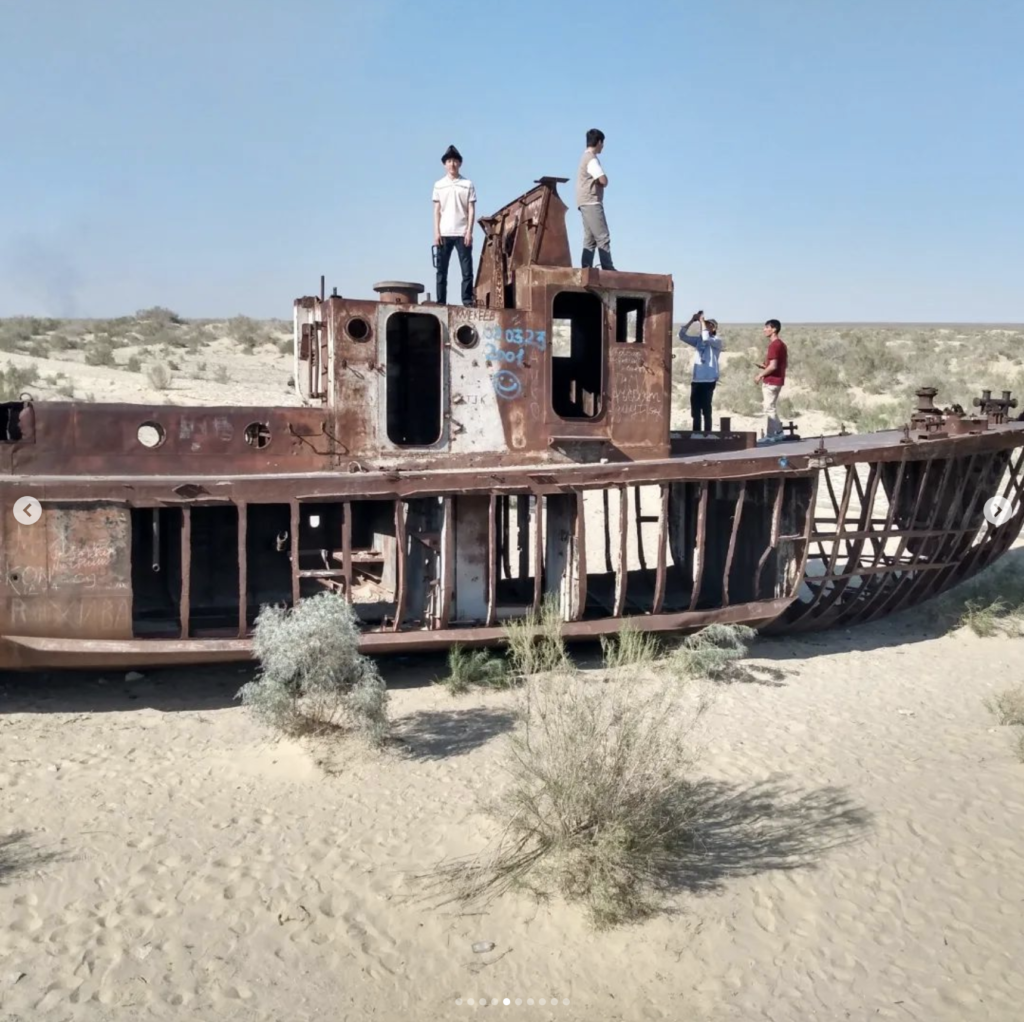
I personally made two posts to Instagram during my time in Uzbekistan. The first was a series of pictures of abandoned fishing boats on the shore of the former Aral Sea, a subject which the study notes was absent from the official website, but occasionally present on Instagram. However, it is featured on the current version of the website, indicating that the government’s alleged desire to draw attention away from at least this specific legacy of the Soviet era may have changed. Despite the supposed lack of online publicity the boats were deliberately curated as a tourist destination, having been neatly lined up at the bottom of a staircase leading down a former seaside cliff from a museum. There were quite a few visitors there unaffiliated with our group, though many were local. The museum itself, which presented film, artwork, and artifacts pertaining to the Aral Sea was very small, as one would expect given the town’s size and remote location.
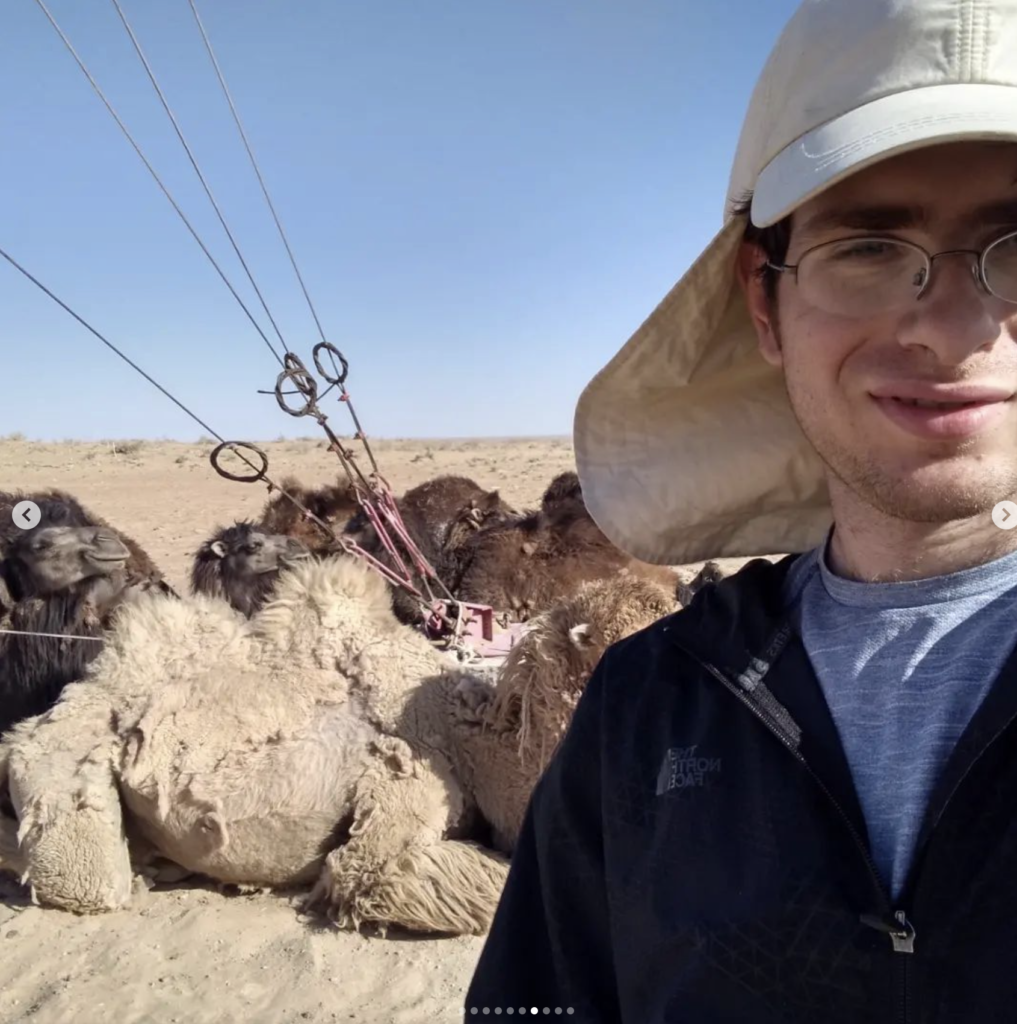
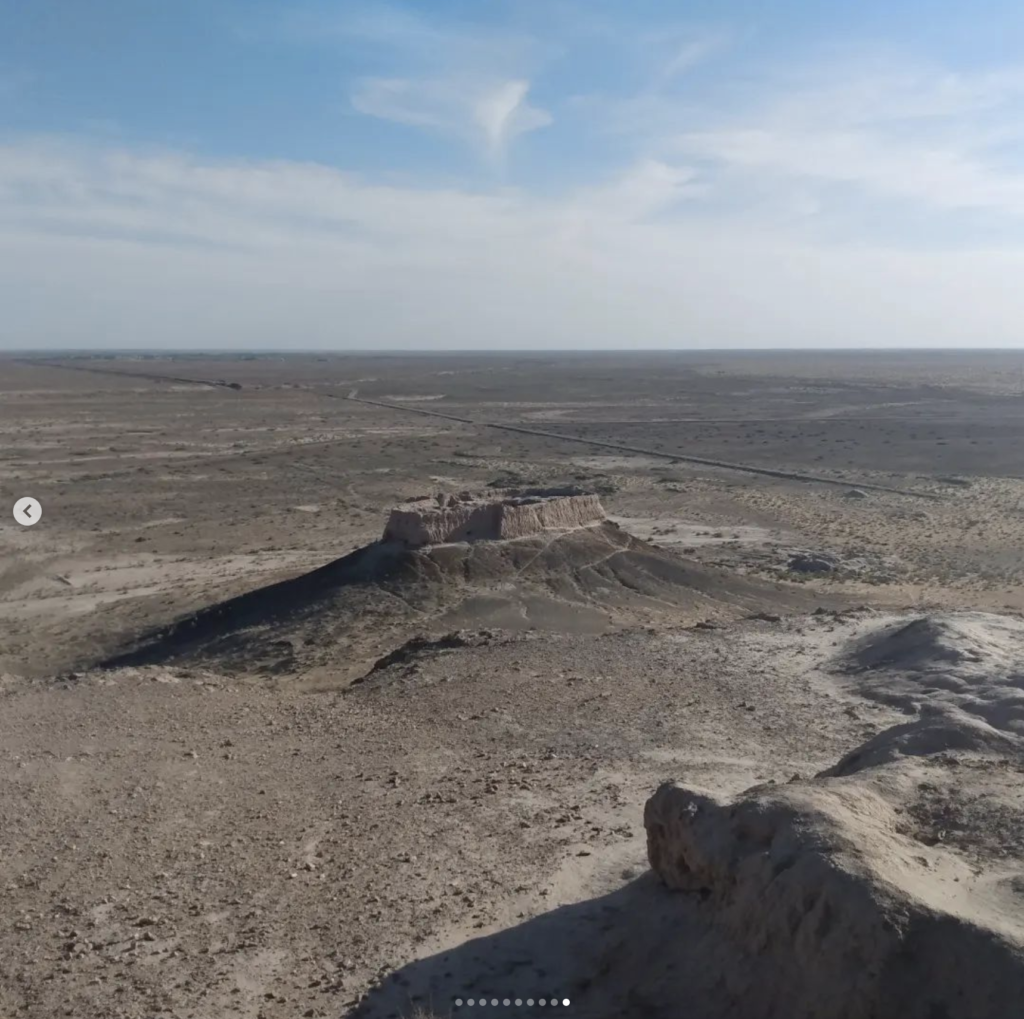
The second Instagram post portrayed a series of ruins we visited when traveling through the desert in western Uzbekistan, as well resting camels and a piece of petrified wood. The ruins could arguably be considered historical buildings, but ruins are not featured prominently even on the new version of the official website, nor are they mentioned in the study. Like the boats, most of the ruins had some accommodations for visitors, such as bathrooms, prepared paths, and in one case yurts where tea was served. It seems that despite the difficulty of accessing the ruins, they had achieved some success as destinations.
In the old, but still inhabited cities, I took a large volume of pictures of historic mosques, madrassas, and palaces, but never posted any of them on Instagram. Nonetheless, they influence the destination image of Uzbekistan, as my family has seen them and I will probably show them to more people in person after returning home. In general, these pictures focused on entire buildings or even cityscapes, but specific architectural features, especially columns, drew me in as well. I was not immune to the broad appeal of these subjects as described in the study.
Taken together, the posts I did make create a somewhat different image of Uzbekistan in the minds of my followers than that intended by the country’s government, at least according to the 2018 study. My posts depict Uzbekistan as a wild, remote place, full of ruins dating from late antiquity to the late 20th century but bereft of other widely promoted attractions such as folk crafts, history buildings, markets, restaurants, and museums. This impression might encourage people who like the outdoors and aren’t bothered by the discomfort involved to visit Uzbekistan, while deterring less adventurous prospective tourists.
