


One of the sights in Uzbekistan that I will never forget is a gas station on a small hill. I took so many photographs of towns and the desert from the window of the bus, and yet I wasn’t fast enough to capture this one image. There was nothing in particular that made this gas station significant or pretty to look at. In fact, it looked like all the other gas stations we had seen thus far on our nine-hour bus ride from Khiva to Bukhara with its wide roof supported by tall pillars that created stalls for cars to pull into and refuel. Indeed the only reason you could tell it wasn’t an American gas station was the foreign company’s name on the roof.
This gas station hasn’t left my mind because it was so ordinary but because of the scene around it. A small, man-made canal with a river ran perpendicular underneath the road and right up to the gas station. And on the grassy banks of this brownish-blue river flowing through the concrete channel, there were women in long, patterned dresses and headscarves farming despite the lack of earth to farm on either side of the river.
The river wasn’t strange, and neither were the farmers. The road through the desert was full of canals built to guide the water through farmland, and in every town we passed there were people in the fields kneeling in the earth or resting underneath a tree to escape the heat of the day. The river and the farmers themselves weren’t out of place, but set against the backdrop of a looming gas station sitting above them on a hill, they created a different scene in my mind.
The river followed its concrete path, flowing under the gas station as if the water was feeding into the building itself. It was almost as if this precious water in the middle of this small town in the desert was not used to give life to the land the workers were toiling over, but instead was being converted into gasoline to fuel more vehicles and further pollute the earth.
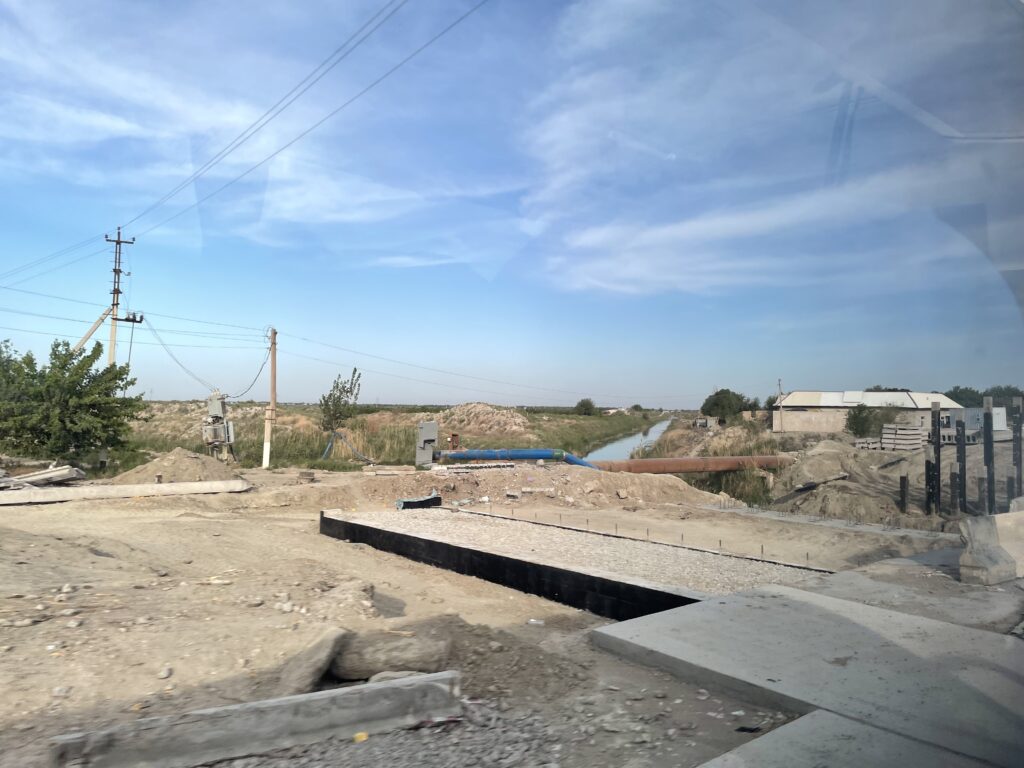
While we saw many ancient historical sites on our journey throughout Uzbekistan, scenes such as this one allowed me to see what the country was like outside of its tourist traps. The simple gas station contrasted with the women farming highlighted our modern day society’s reliance on products like oil and gas that wreak havoc on our environment. To me, this gas station represented the greed of oil companies and their willingness to exploit the environment and disrupt people’s normal way of life for a profit.
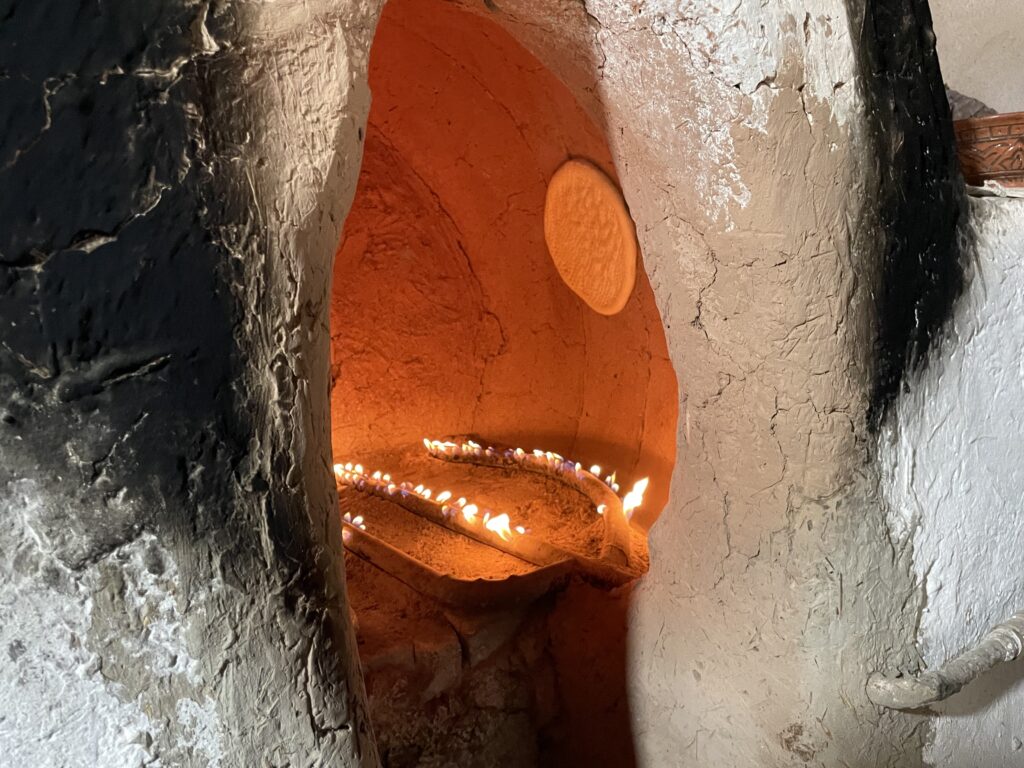
While this image arose from my own imagination, it had a lasting impression on me in terms of how I viewed Uzbekistan. Throughout our trip we were given the full tourist experience, visiting ancient buildings and walking through thousand-year-old cities. We were fortunate enough to see traditional carpet weaving and paper making, and we even got to eat Uzbek bread fresh from the walls of the tandyr. However, I was only able to see a snapshot of what life was like in Uzbekistan today through the window of a bus watching the small towns and desert pass by.
However, one tourist destination we visited showed me a truer part of modern Uzbekistan. My mind went back to this place when I saw the gas station. While to me that station represented modern day oil companies and their exploitation of the environment (even if this image was only in my mind), the Aral Sea was a much bigger reminder of the potentially irreversible effect humanity can have on the world around us.
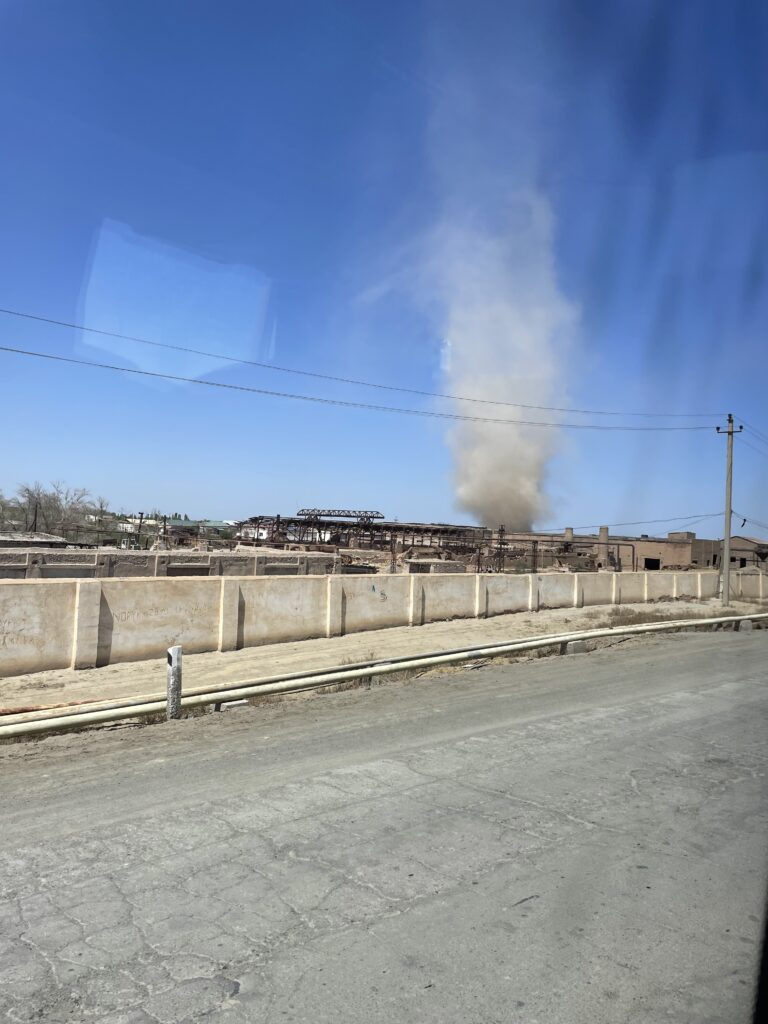
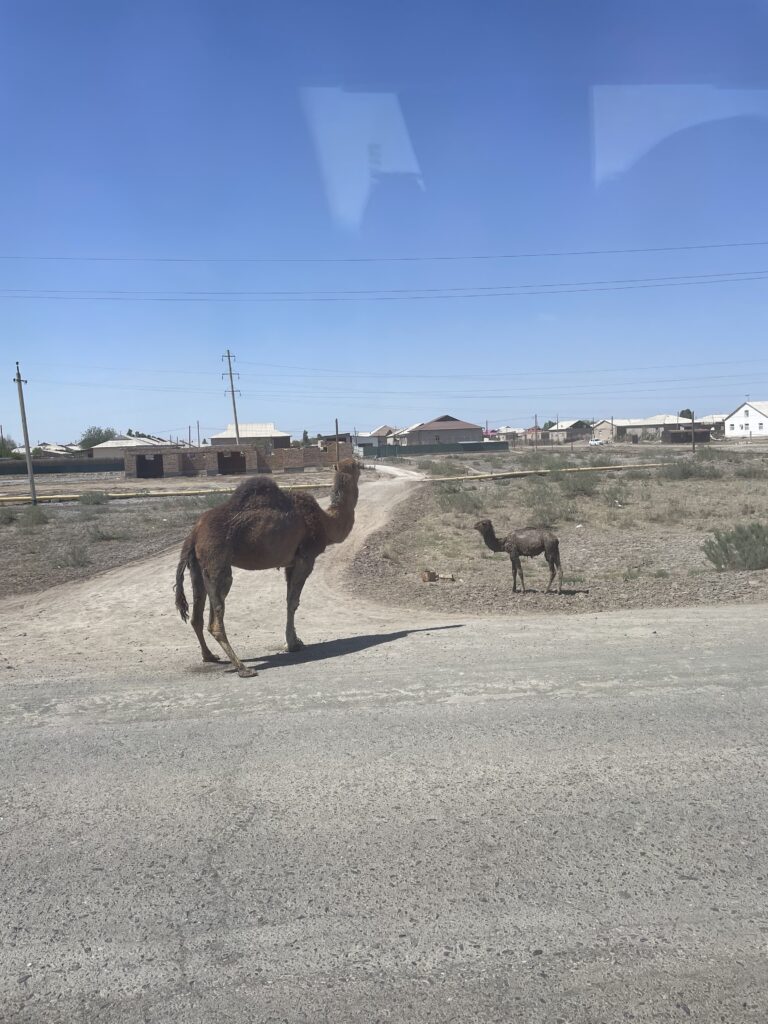
We reached the Aral Sea after almost four hours on a bus driving across bumpy desert roads with only dust devils and camels to keep us company. When we finally arrived, the only real attractions were a tiny museum and the desert, with no water in sight.
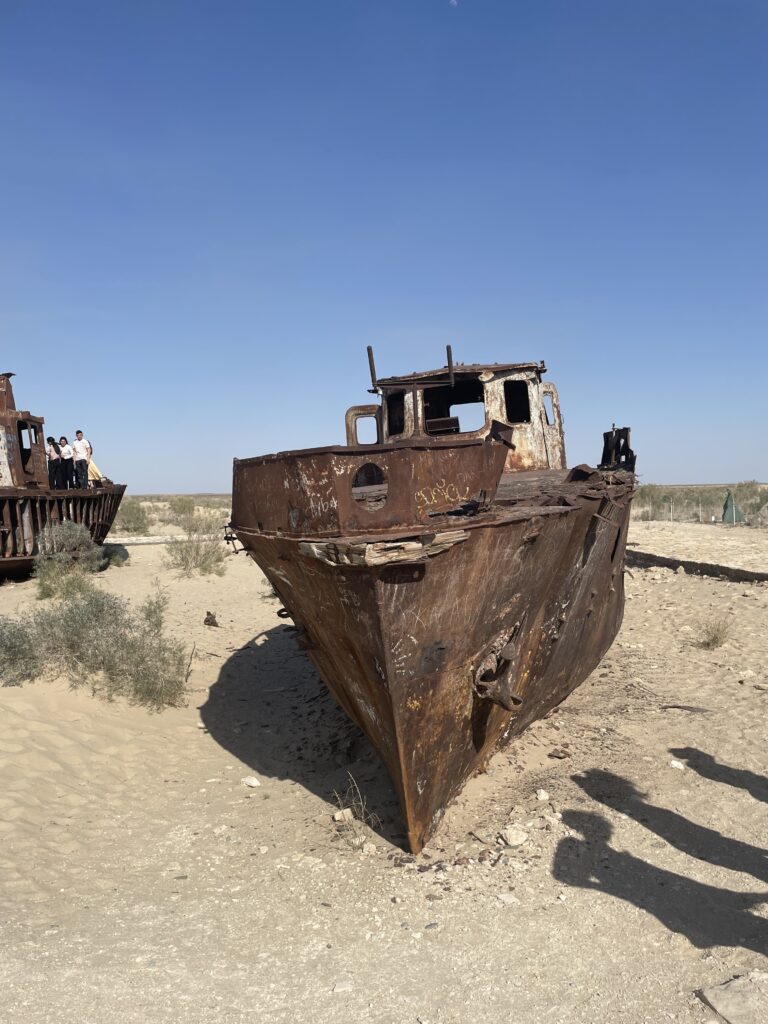
While restoration efforts have helped bring the northern part of the Aral Sea in Kazakhstan back to life, the southern part in Uzbekistan that we visited hasn’t been so fortunate. The sea was all dried up and all that remained were nine rusted ships in the middle of the desert sunken into the sand with no way to set sail.
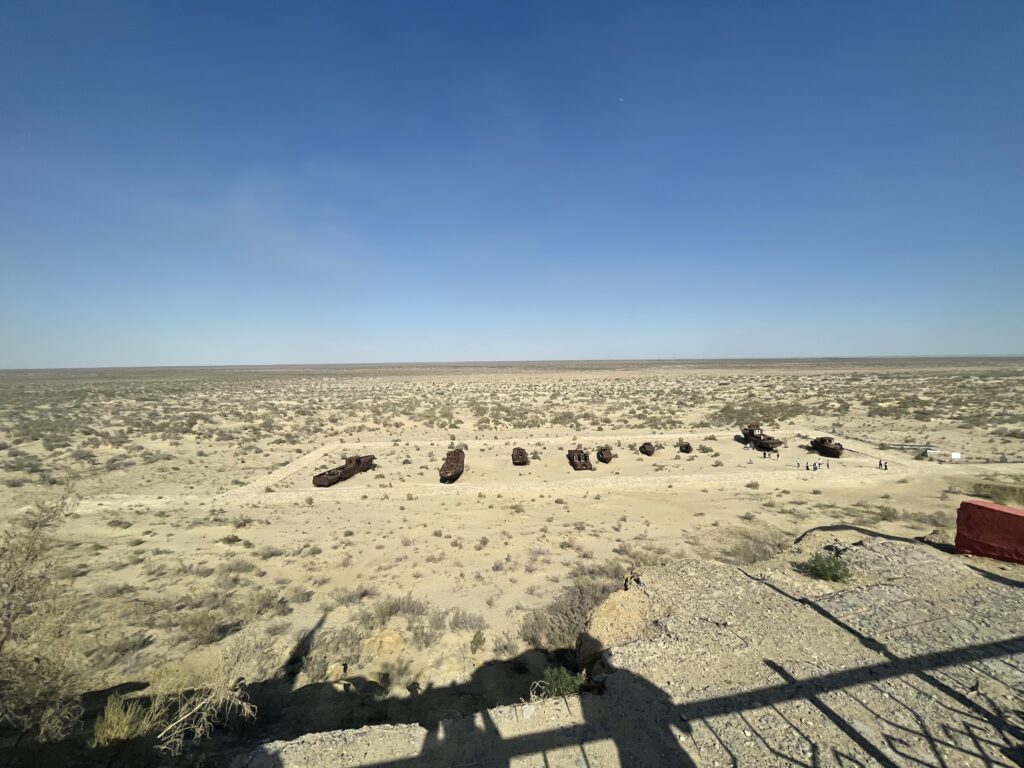
During the time of the Soviet Union, the Soviet government encouraged the Uzbeks to plant cotton, while for centuries the Uzbeks had used the Aral Sea for fishing and farming. The demand for cotton not only forced Uzbek farmers to stop sustainably growing their own food but also took a massive toll on the Aral Sea. Through this forced growing of cotton, the Soviet government made Uzbekistan reliant on food from Russia while draining one of the best natural resources available to them—a resource that Uzbekistan had used sustainably throughout history.
The Aral Sea in Uzbekistan is now a graveyard. When we walked down to see the ships and stand where water once flowed, I couldn’t tell that there had ever been a sea in my place. Little kids and other tourists (including our group) climbed on the boats, using these relics of the past as a playground.
On the long bus ride back to the start of our journey in Nukus, the desert looked just like the remains of the Aral Sea. As the sun set over the farmland, I thought about the simplicity and immenseness of the desert and the waves that once rolled over the sand, crashing against the sides of fishing boats and bringing life to this land.
