“Beloved Mordor” by Pavel Bannikov
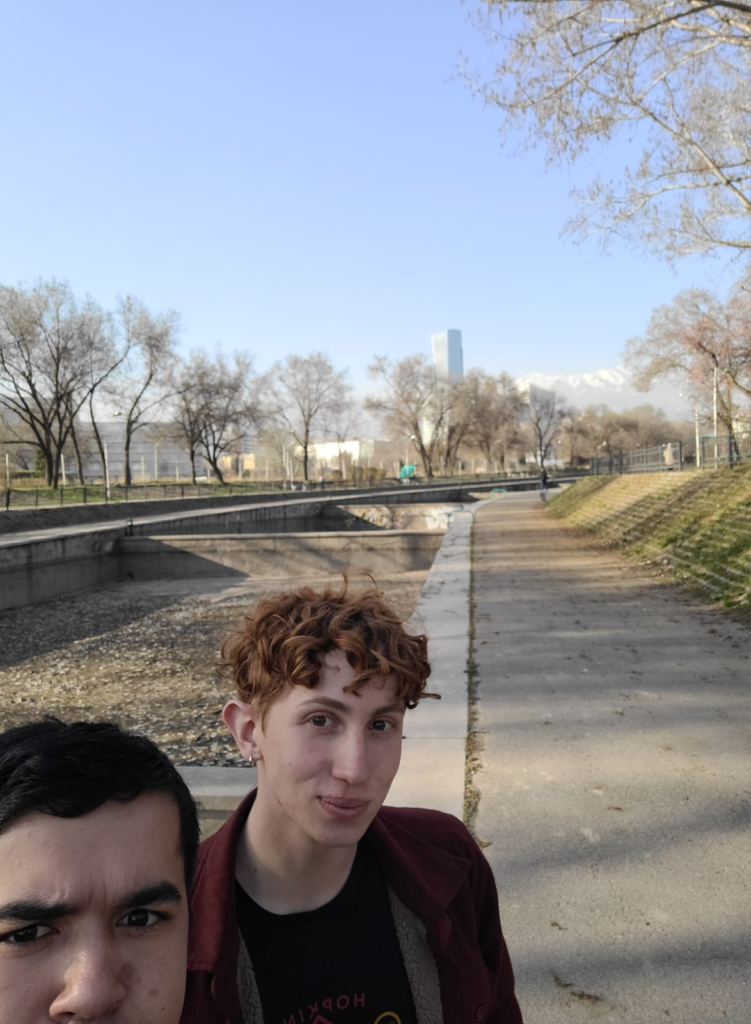
At first glance, it feels odd to compare the seemingly harmless Esentai riverbank to the realm of a dark lord, and even odder to portray this realm in a somewhat positive light. Walking down for the first time, this place felt neither “beloved” nor “Mordor”; it’s just the side of the Esentai River, with a gleaming tower in the distance making us feel rather small by comparison. Still, this metaphor is not without its merits. We just have to do as Bannikov did and use our imaginations.
The path along the Esentai riverbank is long, flat, and industrial, with pipes protruding across the empty concrete canal, the mud within reminiscent of the pits from which Sauron raised his army. Combined with the smog Bannikov mentions, the text highlights the environmental consequences of industrialization. As for the walk itself, Bannikov traversed it on a “warm winter night”. We went during the day, but I imagine the dark of night would make it feel even more “Mordor”. The walk wasn’t exactly scenic, save for the “glimmering buildings” in the distance, which refers to the Ritz-Carlton atop Esentai Tower. This, too, is the “Eye of Sauron” as depicted in the text and illustration, as the tower is ever-present in the distance, looming high above at a place where none can escape its gaze.
As mentioned, Bannikov’s scenery (while bleak) is also somewhat mystical. Orcs, pixies, and dwarves create an almost lively air in the dark atmosphere, representing the various people who might walk this path. This area is often bustling with joggers, people walking pets, or parents and children going to the nearby park. As such, Bannikov’s depiction of the Esentai riverbank as “Mordor” may not be entirely negative, and he likely considers this a nice walk.
“Ascension Cathedral” by Aliya Dzhirman
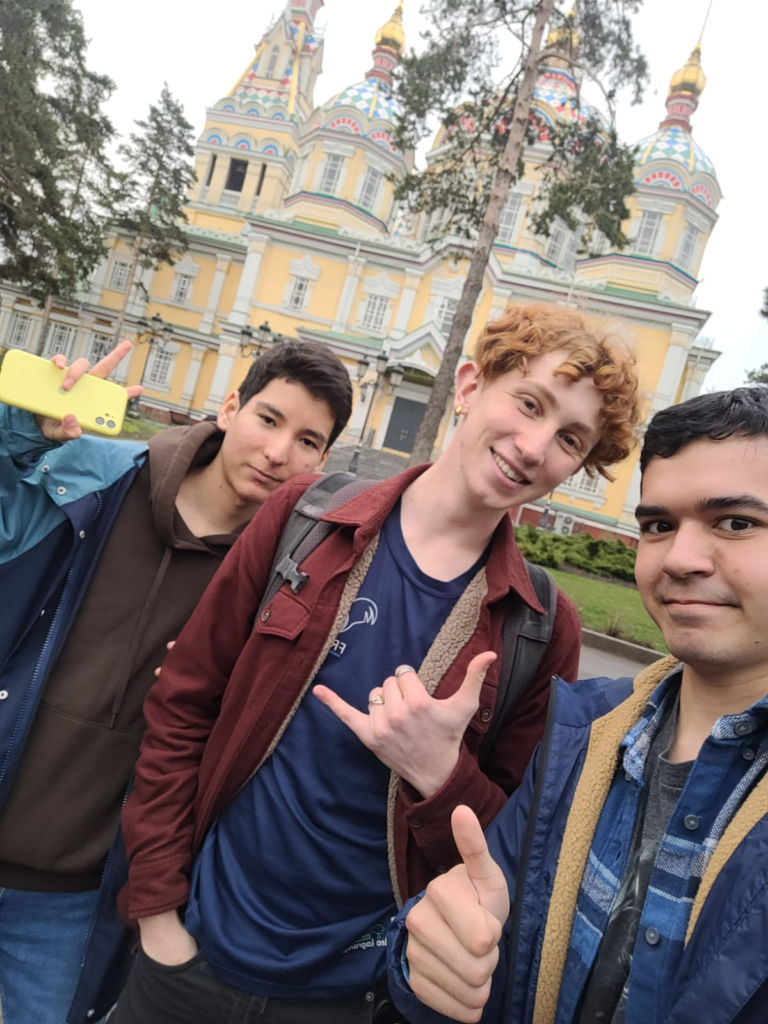
I can see why Aliya Dzhirman wrote a poem here. This place feels so existential and exquisite that the drab normality of the pigeons is almost offensive.
You. The pigeons I mean. They’re begging to be eaten, fat and stupid, unruly and unafraid. But I’m sure there’s an ordinance against it. I can’t be the first to feel this desire.
I looked around wondering where Aliya could’ve been sitting, maybe on one of the many benches, maybe she never took a seat at all. The pigeons might’ve swarmed her and scared her off. But she couldn’t have been far away, she took in the sights of the unenviable beggar, brought to the cathedral on the hope that maybe people are better when faced with God. But if we were such a species, I would’ve given them the 5000 tenge bill that sat heavy in my pocket.
We all collect at the cathedral for ourselves. I’m here because I’m required to be, the pigeons are here to feed, and the desperate are here to survive. Yet we only pay attention the pigeons, spending money on bags of seed desperate for the overfed birds to come and feed out of our very hands mere moments after the desperate looked you in the eyes as you tried your hardest to pretend they didn’t exist at all.
“The Stone Letter” by Lilya Kalaus
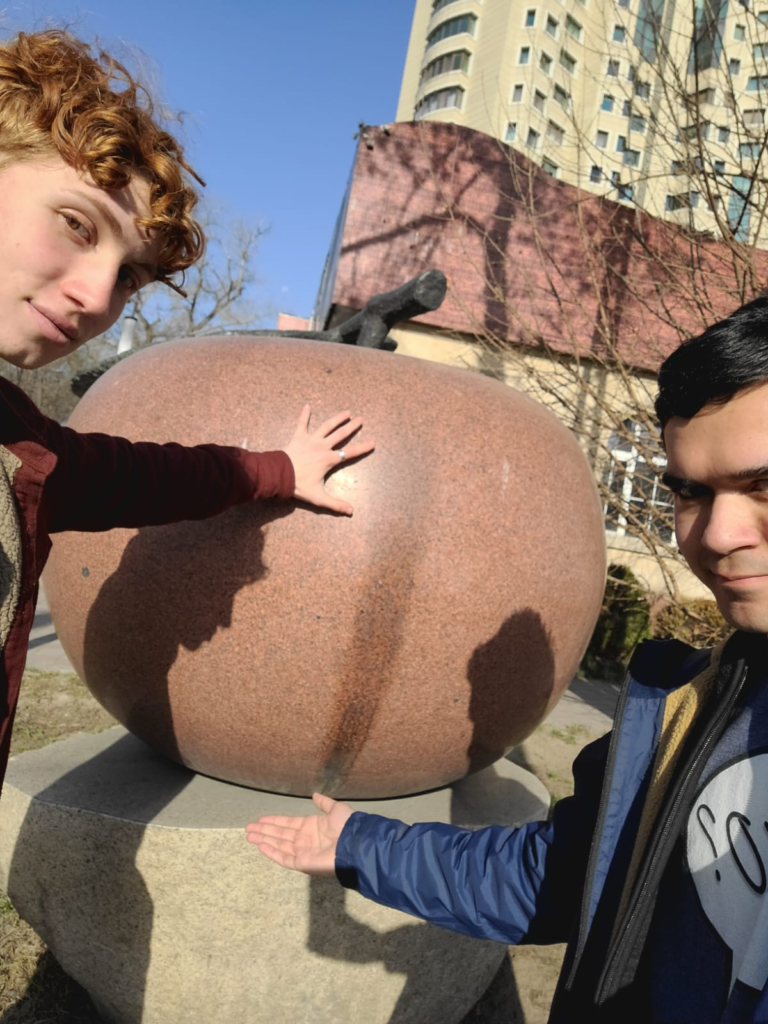
This is just an intersection and an apple. Maybe that’s why it’s so important. The sight of an apple made giant inspires dreams of what else could be so. What else lives among us is waiting to be magnified.
Man? Well not quite, we might imagine him as a man because we are so incapable of imagining the mountains as being conscious without putting ourselves in the middle of the equation. So we’re left with a man, invisible, unrestrained by the mortal confines of hunger and time. A man carved from stone, just like our apple friend who now seems oh so little.
This is just an intersection. So Liliya Kalaus found a way to walk us away from the unchanging moment, filled with concerns the size of apples and as fleeting as the cars weaving through each other. We walked into geological history, into the concerns bigger than us, that only matter to us since they affect us. Mudslides, cracked streets, collapsed houses.
If I was dragged to this intersection and forced to write something, I too would do my best to find the tiniest details, the cracks in the granite apple, just so I could escape the threatening regularity that defines this intersection. The heart of Almaty. It’s not a church or cultural sight, it’s just another intersection with an apple clumsily lain aside it.