Imagine you lived in a time and place where the authorities were ceaselessly and ruthlessly hunting for imagined enemies, where annoying your coworkers, a careless slip of the tongue, or even simply knowing the wrong people could all land you in prison or an unmarked grave. Would you keep your head down and try to stay out of trouble? Would you stand up for what you believed in despite the consequences? Would you actively participate in the regime’s hunt for villains in hopes of saving yourself? Would you try to find a career where you wouldn’t attract the attention of the state?
Such was life in the Soviet Union in the late 1930s, and such were the choices faced by the millions of people living there at the time. One among them was writer Yury Dombrovsky, who loosely based his 1964 novel The Keeper of Antiquities on his experiences. Dombrovsky himself spent 20 years in the GULAG system, having been arrested and released 4 times, the first time for “cynical acts of [drunken] hooliganism” involving the Soviet flag, and the final time for corruption, a crime for which he was later exonerated. He was also exiled to Alma-Ata, then the capital of the Kazakh SSR, where he chose to set The Keeper of Antiquities.
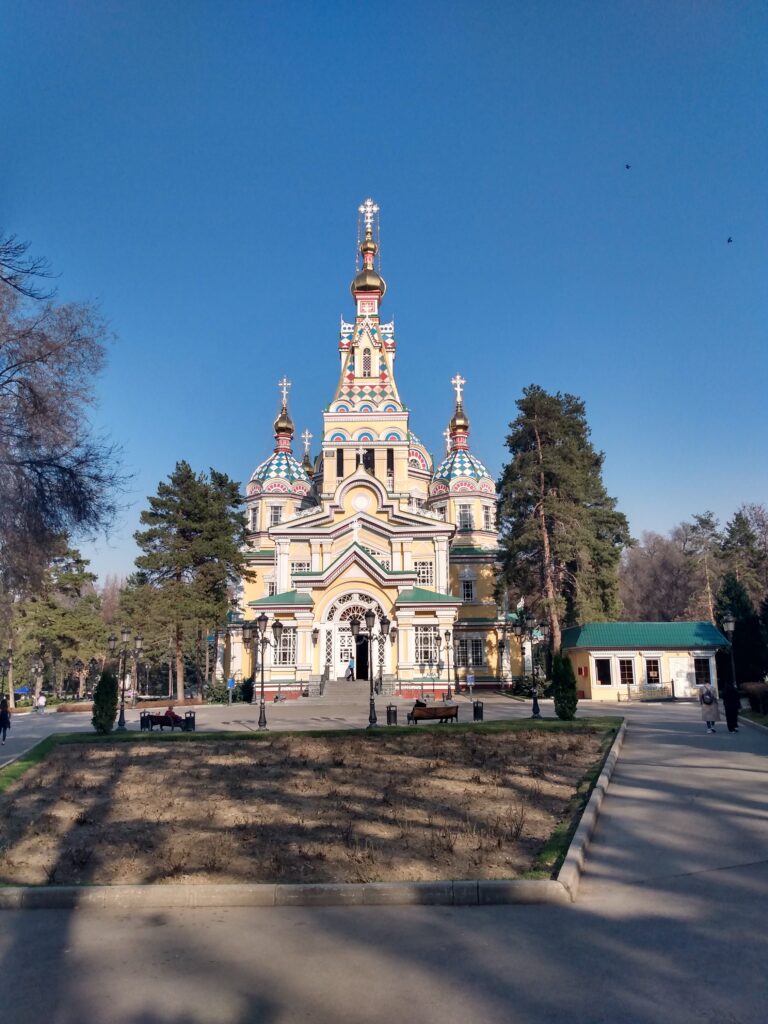
The book is narrated by a main character, referred to only as the Keeper of Antiquities, who shares many biographical and character traits with the author. An archaeologist by training, he begins by vividly describing his arrival in Alma-Ata, to which he has come to work at the museum located in the former Ascension Cathedral. The main conflict in the book, which takes place between him and the city’s librarian, is prompted by an article the Keeper writes for the local newspaper about the library. The librarian presents her criticisms of the Keeper to his superiors in the language of Soviet ideology, to which the Keeper is largely indifferent, frequently stating that he’s just a scientist who is interested in knowledge for its own sake. This conflict is also mirrored in more minor disputes with coworkers at the museum about how the history of the city should be portrayed to the public.
Here Dombrovsky forcefully shows that the provincial location of Alma-Ata is not enough to shield the Keeper from the totalitarian state in which he lives, as he is surrounded by plenty of people who either sincerely believe in the state’s narrative or simply go along with it publicly, from the collective farmer who maintains that his brother was justly executed for poisoning grain on behalf of foreign powers, to the librarian who castigates him for trusting a former political prisoner working at the library. Most of the Keeper’s conflicts aren’t directly with the NKVD (with whom it would be pointless to argue), but with civilians criticizing his work for failing to adhere to the state’s ideology. But that doesn’t mean that everyone, or even every Communist is an enemy to the Keeper, as is shown by the character of the museum Director, a former military officer who repeatedly shields him from punishment by superiors. While there isn’t a place he could run to to escape the terror, there are, to some extent, people to whom he can run.
This is not to say that the Keeper carefully cultivates relationships with the right people. On the contrary, he has an abrasive personality and isn’t afraid of conflict with authorities. At times it seems that he doesn’t appreciate what the Director does to protect him.
Much of the book takes place inside the Keeper’s own head, filled with descriptions of the city and the artifacts with which he works. Many of them may seem irrelevant to the plot, and though they are all well written and interesting, some more important details contained therein fail to stand out from the rest. These sections add to the book’s message in part by providing a window into how the Keeper is thinking about the environment in which he lives. In particular, digressions on the ancient history of Alma-Ata and the various empires that have come and gone serve to show how the Keeper puts the Stalinist terror in perspective, as something that too will someday only be remembered by antiquarians.
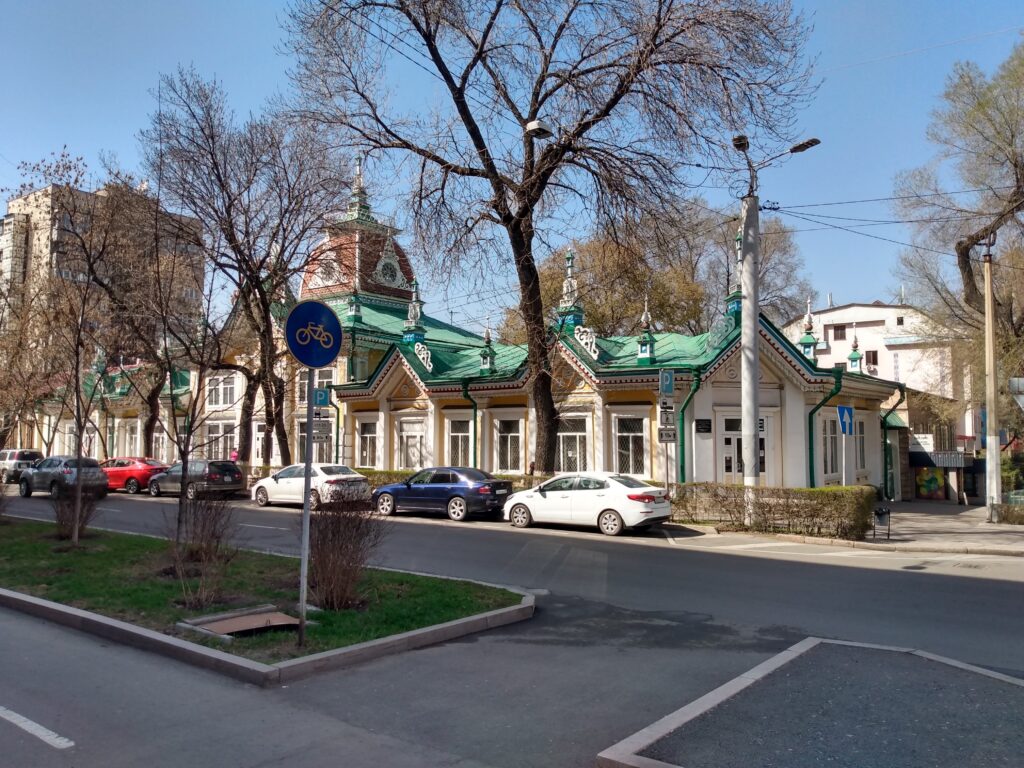
It’s especially interesting to read having spent time in the city where it takes place, to whose relatively short history the book adds detail and depth. Though the abundance of plant and animal life described in the first chapter has diminished quite a bit, the museum from the book, now a cathedral again, still stands along with a few other creations of Andrei Zenkov, the architect who in the Keeper’s telling rebuilt much of the city after an 1887 earthquake. His affinity for bright colors and pointless pointy spires stands out to this day amid the gray, rectangular apartment buildings left by the Soviet era.
All in all, The Keeper of Antiquities is an engaging read and a direct window into life under the Stalinist terror of the 1930s. How close can the Keeper get to the life of undisturbed study that he wants in such an environment? Read the book to find out.